
How are serves likely to be returned?

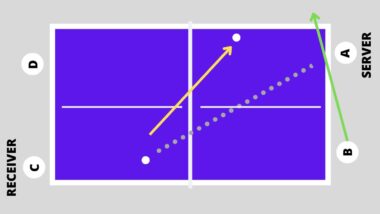
How are serves likely to be returned?

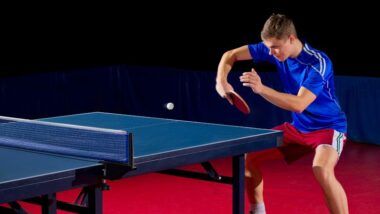
How well do you know your serves? Hopefully you know how to execute your serves, but do you have a good understanding of how your serves are likely to be returned? This is a key aspect of serving, which is often overlooked, especially at local league level. Keep reading

Rate your serve … how strong is your service game?

Rate your serve … how strong is your service game?

We all know that having a strong service game is very important. But what makes a strong service game? What are the key components? And how good is your service game, really? In this article, I outline five key elements of a strong service game. I give myself a rating for each element and I want you to do the same. This will help you identify the areas where you can improve your service game. Keep reading

We keep losing deciding games. How can we start winning?

We keep losing deciding games. How can we start winning?

The team I play for has just finished the winter season in 11th place in a 12-team division: we felt we played fairly well but lost so many games that went to the fifth end – and we blew it. I guess we need more consistency overall, but can you think of any drills that would get us over that fifth-end issue? I think it’s just learning not to tense up (so easy to say) and to play to our strengths but we could do with a bit of help! Keep reading

REVIEW: TIBHAR Evolution MX-P 50

REVIEW: TIBHAR Evolution MX-P 50

For the past few weeks I have been using TIBHAR Evolution MX-P 50 on my forehand. This is the ‘hard’ version of the very popular MX-P rubber.  The topsheet of MX-P 50 is the same as the original MX-P rubber, but the sponge underneath is harder. This is supposed to give a more direct trajectory and more speed. What’s it like to play with? And what type of player would benefit from using this rubber? Keep reading

Tentative play is the worst … here’s how to fix

Tentative play is the worst … here’s how to fix

One of the worst things you can do in a table tennis match is be tentative. I should know. I’ve been way too tentative more times than I care to remember. A tentative shot is a shot that you don’t really commit to. You hesitate. You tense up. You only play half the shot. Why are some of us prone to tentative play? And what can we do to fix it? Keep reading

Should I change my anti-spin rubber?

Should I change my anti-spin rubber?

I bought a Der-Materialspezialist Wizard blade with inverted rubbers, which is quite light and I liked it. However, I was told if I replaced one of the rubbers with an Anti-Power rubber by Yasaka it would deflect all the spins received from other players. I think now it’s preventing me from adding spin to my … Keep reading

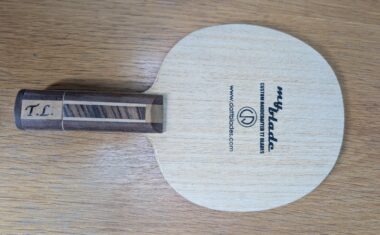
REVIEW: TIBHAR Felix Lebrun Hyper Carbon blade

REVIEW: TIBHAR Felix Lebrun Hyper Carbon blade

For the past few weeks, I have been testing the TIBHAR Felix Lebrun Hyper Carbon blade. I’ve been getting some pretty decent results in my local league matches, so I want to share my thoughts about the blade, its playing characteristics and what playing style it is best suited to. Keep reading

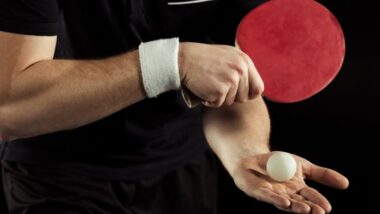
How many hours should you train for improvement in table tennis?

How many hours should you train for improvement in table tennis?

If you want to improve at table tennis, you have to put the hours in. Table tennis is a complex, fast paced sport. It can take a long time to reach an advanced level. How many hours you should train depends on a few different factors … the level you want to reach, your age, your life circumstances and availability of training opportunities. I’m going to outline a few different scenarios and what type of improvement you are likely to expect. Keep reading